Berberis Aristata


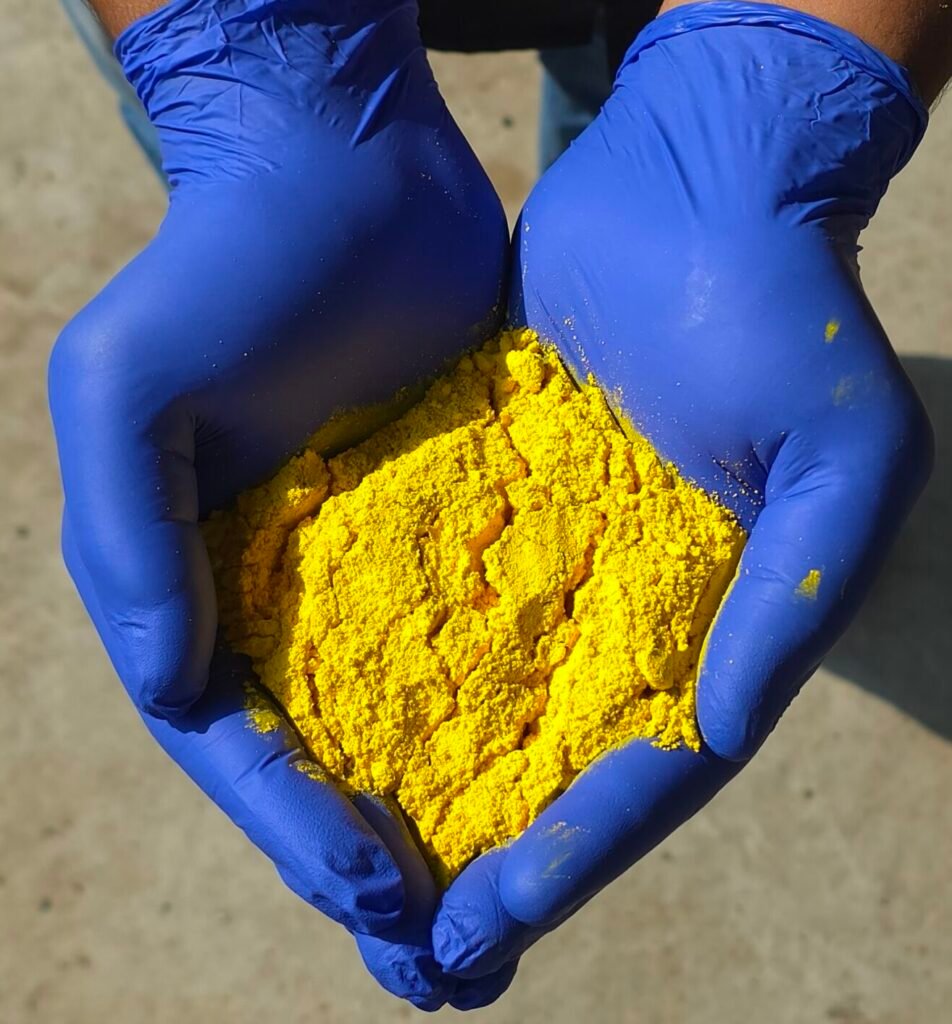
Berberine is a bright-yellow isoquinoline alkaloid salt (protoberberine class) traditionally found in botanicals such as Berberis aristata (Indian barberry) and Coptis chinensis. In hydrochloride form it’s highly water-soluble, making it a versatile active for capsules, tablets, beverages, and novel delivery systems. MP Bionat offers food/nutraceutical-grade Berberine derived a 100% from the roots of Berberis Aristata with stringent quality control. As a plant-based wellness ingredient, Berberine Hydrochloride helps keep your metabolism’s gears running smoothly—supporting healthy glucose response, lipid balance, and a happy gut.

Benefits:

1. Supports a balanced inflammatory response

2. Supports a healthy gut environment

3. Supports healthy lipid levels

4. Manages symptoms of PCOS

5. Helps maintain brain wellness and mental clarity

Research Basis:

This section is an educational summary of peer reviewed studies on Berberine Hydrochloride. The information below is for knowledge purposes only and does not claim any cure for diseases or symptoms. Kindly visit your healthcare professional for treatment. 

Supports Healthy Blood Sugar & Insulin Function

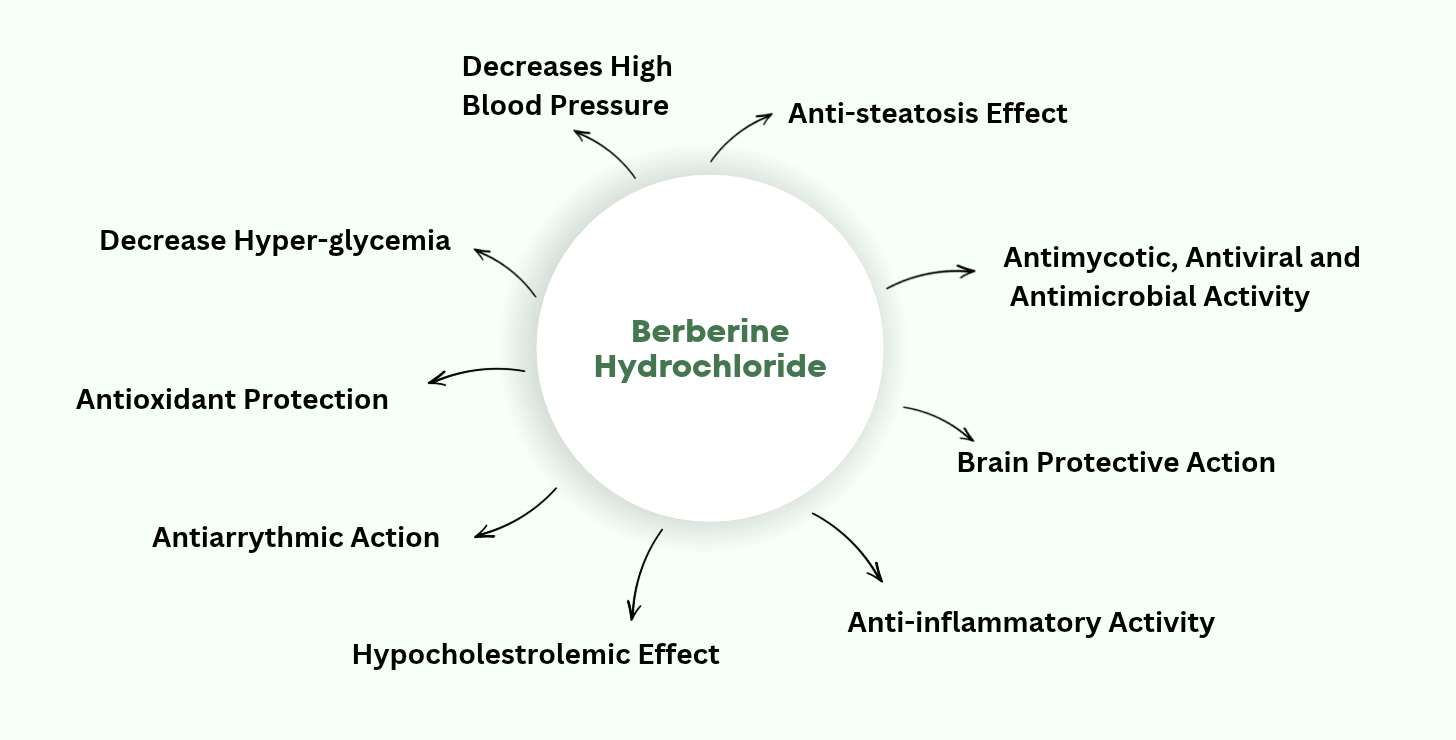
Berberine demonstrates notable anti-diabetic effects in human trials and significantly lowers elevated blood glucose levels and improves insulin sensitivity. In a meta analysis of 37 clinical trials with 3000+ patients it was found that berberine reduced fasting blood sugar by ~0.8 mmol/L and HbA1c by about 0.6% in people with type 2 diabetes (Xie et al., 2022), and no evidenced increase in hypoglycemia or adverse effects. 

Maintains heart health and cholesterol profile

Berberine supports a positive impact on blood lipids and cardiovascular risk factors with clinical trials and reviews suggesting improvement in cholesterol profiles. A systematic review of 16 trials shows that berberine supplementation lowered total cholesterol by ~0.47 mmol/L and LDL (bad) cholesterol by ~0.38 mmol/L, on average. HDL (good) cholesterol saw a modest increase while Triglyceride levels also dropped significantly (Ju et al., 2018). These changes suggest a healthier cardiovascular system.

Improves Liver, Digestive and Gut Health

Berberine is shown to enhance liver function and metabloic markers in Non-Alcoholic Fatty Liver Disease (NAFLD) patients. In a meta analysis of 10 RCTs in NAFLD patients, Berberine significantly improved liver enzymes and reduced ALT, AST and GGT levels indicating healthier liver function. There was an improvement in insulin resistance (HOMA-IR Index) (Nie et al., 2024). Used traditionally as a herbal medicine for gastrointestinal ailments, modern clinincal research suggest its antimicrobial and anti-inflammatory properties improves certain GI conditions. Berberine containing therapy increased the Helicobacter pylori (a common cause of ulcers) eradication rates by ~22% compared to standard triple therapy (Hu et al., 2020). Berberine also supports a balanced gut microbiome, combating hamrful bacteria while managing gut inflammation.

Supports Women's Health, Balances Hormones and Metabolism in PCOS

Clinical studies indicate Berberine improving the metabolic and endocrine abnormalities in PCOS. Berberine is as effective as metformin (a common PCOS medication) when combined with cyproterone acetate (CPA) at reducing insulin resistance and imporoving glucose and lipid metabolism in PCOS patients. Women taking berberine have achieved lower blood sugar and better cholestrol levels which are key targets in PCOS management (Li, Zhou and Li, 2018).

Supports Mental Health and Maintains Overall Wellness

Berberine supplementation helped patients perform better on attention and executive function tests and these gains were correlated with decreases in inflammatory markers IL-1β, IL-6 and TNF-α (Pu et al., 2023). Berberine’s anti-inflammatory action in the brain might help mitigate coginitive defects and schizophrenia symptoms. Berberine exerts antimicrobial effects able of accumulating in bacterial cells and of binding both single and double stranded DNA, thus leading to bacterial death by DNA damage (Micol Tillhon et al., 2012). It also exhibits anti-fungal activity on Aspergilus, Pencillium, Candida and Cryptococcus. In in-vitro models, Berberine shows strong anti-cancer mechanisms: it damages mitochondria, generates ROS, shifts the balance toward apoptosis, shuts down key survival/invasion pathways (HER2/PI3K/AKT, ERK, NF-κB, AP-1, etc.), and even interferes with telomere protection.

  1. Hu, Q., Peng, Z., Li, L., Zou, X., Xu, L., Gong, J. and Yi, P. (2020). The Efficacy of Berberine-Containing Quadruple Therapy on Helicobacter pylori Eradication in China: A Systematic Review and Meta-Analysis of Randomized Clinical Trials. Frontiers in Pharmacology, 10. doi: https://doi.org/10.3389/fphar.2019.01694

  2. Ju, J., Li, J., Lin, Q. and Xu, H. (2018). Efficacy and safety of berberine for dyslipidaemias: A systematic review and meta-analysis of randomized clinical trials. Phytomedicine, 50, pp. 25–34. doi: https://doi.org/10.1016/j.phymed.2018.09.212

  3. Kumar, A., Ekavali, Chopra, K., Mukherjee, M., Pottabathini, R. and Dhull, D.K. (2015). Current knowledge and pharmacological profile of berberine: An update. European Journal of Pharmacology, 761, pp. 288–297. doi: https://doi.org/10.1016/j.ejphar.2015.05.068

  4. Lan, J., Zhao, Y., Dong, F., Yan, Z., Zheng, W., Fan, J. and Sun, G. (2015). Meta-analysis of the effect and safety of berberine in the treatment of type 2 diabetes mellitus, hyperlipemia and hypertension. Journal of Ethnopharmacology, 161, pp. 69–81. doi: https://doi.org/10.1016/j.jep.2014.09.049

  5. Li, M.-F., Zhou, X.-M. and Li, X.-L. (2018). The Effect of Berberine on Polycystic Ovary Syndrome Patients with Insulin Resistance (PCOS‐IR): A Meta‐Analysis and Systematic Review. Evidence-Based Complementary and Alternative Medicine, 2018(1). doi: https://doi.org/10.1155/2018/2532935

  6. Micol Tillhon, Guamán, L.M., Lombardi, P. and A. Ivana Scovassi (2012). Berberine: New perspectives for old remedies. Biochemical Pharmacology, 84(10), pp. 1260–1267. doi: https://doi.org/10.1016/j.bcp.2012.07.018

  7. Nie, Q., Li, M., Huang, C., Yuan, Y., Liang, Q., Ma, X., Qiu, T. and Li, J. (2024). The clinical efficacy and safety of berberine in the treatment of non-alcoholic fatty liver disease: a meta-analysis and systematic review. Journal of Translational Medicine, 22(1), p. 225. doi: https://doi.org/10.1186/s12967-024-05011-2

  8. Pu, Z., Wen, H., Jiang, H., Hou, Q. and Yan, H. (2023). Berberine improves negative symptoms and cognitive function in patients with chronic schizophrenia via anti-inflammatory effect: a randomized clinical trial. Chinese Medicine, 18(1). doi: https://doi.org/10.1186/s13020-023-00746-4

  9. Xie, W., Su, F., Wang, G., Peng, Z., Xu, Y., Zhang, Y., Xu, N., Hou, K., Hu, Z., Chen, Y. and Chen, R. (2022). Glucose-lowering effect of berberine on type 2 diabetes: A systematic review and meta-analysis. Frontiers in Pharmacology, 13, p. 1015045. doi: https://doi.org/10.3389/fphar.2022.1015045